

All the residents of the resilient city are guarded against immediate and chronic stresses within urban systems and are prepared for future potential challenges. Resilient neighbourhoods are less vulnerable to sudden changes and sustain the operation of services and urban systems that can help in withstanding any potential crisis and facilitate the recovery process. Resilient neighbourhoods are self- reliant in their ability to function in the instance of reduced availability to resources (for example using local building materials can reduce the need for cooling or heating systems). In addition to building adaptation to the changing world, resilient urban form may support and enhance existing social and economic structures, improving the community well-being.
The Resilient City relates to the New Urban Agenda transformative commitments: 25, 31, 32, 34, 36, 37, 38, 39, 43, 44, 62, 65, 67, 68, 69, 70, 73, 77

Mixed land use coupled with high residential density and public transportation system directly contributes to urban resilience, promoting efficient use of land and infrastructure, walking and cycling, reduction of car dependency, and protection of environmentally sensitive resources. Refer to 1.2. for the suggested floor area distribution.

5.1.1 Mixed Urban Block
In addition to multiple benefits as per 1.2.2 and 3.1.3 and 4.1.2, multi-functional buildings help to minimize building footprint and promote an efficient use of land, resources and more compact development patterns.

If implemented appropriately, densification is a powerful tool in achieving a resilient city by facilitating the efficient use of urban land, urban form and systems, limiting urban sprawl and, thereby, motivating the preservation of environmental assets, rural areas, and farmlands, heritage sites, etc. Densification should be applied within the current built-up area to connect to the existing infrastructure networks, along main public transport corridors and/or within identified primary and secondary nodes considering the wider scale.

Resilient neighbourhoods should provide residents with a walking distance to key services, infrastructure for safe walking and cycling.
5.3.1 Permeable Street Network
The overall street connectivity (that can be measured by the level of permeability of the street network) is critical in achieving urban resilience by providing better accessibility to urban services and promoting walkability through the variety of routes. The efficient and permeable street network that provides convenient movement should be linked with minimum dead ends and physical barriers. As an indication, the permeable street network should have 80-100 street intersections per km2.

5.3.2 Gridded Network And Fine Grain
Gridded networks with smaller blocks) of no more than 1000m as suggested by the Institute for Transportation and Development Policy) ensure better service accessibility, facilitate rapid evacuation in case of disaster and support
supply delivery during the recovery phase, all of which are critical in disaster-prone areas.

The resilient city relies upon an efficient street network that is adapted to a variety of mobility patterns. As per 2.1 in high density mixed-use urban areas, it is recommended that at least 30 per cent of land is allocated for roads and parking, and at least 15-20 per cent is allocated for open public space.
5.4.1 Universally Accessible Streets For Convenient And Efficient Movement
To ensure the convenient and safe movement of people of all abilities, it is crucial to ensure universal accessibility. As per 3.6.1, clear paths of travel, curb ramps, tactile surfaces, convenient wayfinding signage that is accessible and clear for all street users (vision impaired guidance, etc.), green and clear buffers and minimum barriers should be considered. The well planned linked street network that accomodates for topographic features is critical for efficient and convenient movement for all.

Multi-modal transport systems overlayed with densely populated urban areas facilitate a more efficient circulation pattern and can improve social cohesion. Residents should have a wide choice of transport modes that are available
and accessible, such as cycling, taking public transport / e-transport, driving. In addition, a multi-modal transport system should encourage the use of transport options that benefit the most sustainability and community well-being. That implies a variety of convenient, well-designed routes (cycling paths, sidewalks, tracks, public transport infrastructure, etc.) and affordability (public transport cost, bike sharing, etc.) as per 2.2.

5.5.1 Efficient Public Transport
Public transport significantly contributes to the resilience of a city, encourages people to have healthier lifestyles and leads to a more self-sufficient and energy-efficient urban form by reducing the dependence on fossil fuels. As per 1.3 residents should have easy access and a 5 to 15 minutes walking distance to public transportation stops, that are designed according to contextual needs (provide shade, sitting area, etc.) and comply with universal design standards.

The need for climate-resilient, affordable housing is critical to frontline communities in cities as they recover from and prepare for shocks (especially as a result of climate risk). Apart from providing affordable housing, it is important to ensure housing stability as well as provide opportunities for employment within the neighborhood. In addition, it is crucial to strengthen the resilience of stable housing to climate change.

Though the provision of stable housing should be addressed in both legal and institutional dimensions, it is critical to spatially define areas for stable housing, particularly in the context prone to life-threatening hazards where the population affected should be relocated from their homes. The stability of new housing in this case is crucial for community well-being.
5.6.1 Stable And Affordable Urban Utilities
It is critical to consider cost-effective and sustainable energy solutions that support the efficiency of city-wide or localized energy grids in the most cost-effective way. Renewable power, water capture techniques aids, nature-based solutions and high-performance design of new development can reduce the pressure on grid operation, minimising the cost for utilities and in some contexts improve the quality and stability of those (e.g. water harvesting, water filtering through context-specific vegetation). Were applicable, new development should consider improved construction techniques, better insulation material, LED lighting, passive heating /cooling techniques etc., that will facilitate the reduction of utility costs.

Solutions on stability and energy efficiency should be coupled with campaigns to increase awareness of human behaviour in energy saving. It is important to note that local culture, traditions, and habits should be considered to ensure such interventions can be implemented. Consultation with actors who know the context is necessary while developing design solutions.
Climate responsive urban design is most effective when applied at the neighborhood scale, where urban morphology, geometry of spaces and street orientation can be manipulated to leverage from climatic conditions and make the neighborhood resilient to climate change, e.g. enhancing shadows, navigating the wind patterns, reducing energy consumption, etc. Selected materials and vegetation can have a greater impact to reduce urban heat island, reflection of solar radiation amongst others, leading to a more comfortable outdoor conditions. Such aspects as the sun path and solar position, site-specific climatic conditions (humidity, rainfalls, etc.), seasonality, historical weather patterns, and topography should be considered in the design development phase. The interactions between structure (layout, form,land use, materials, greenery), energy, water and waste should be designed to minimise the flow of resources needed for neighborhood operation. In addition, a resilient neighborhood should minimize waste and transform it into beneficial uses following the three “R’s” (Reduce, Reuse, Recycle).

Tools such as lighting models, daylighting studies, estimation of the urban heat island might be useful to understand how the design best integrates the local climate and micro-climate specific to the site. The site-specific climatic conditions should be analysed at the early design phases to ensure multiscale application of climate-responsive design principles across the different dimensions (street, public space, building unit). It might be helpful to analyse the vernacular architecture and how traditional buildings adapted to environmental conditions.
5.7.1 Hazard Mitigation
Neighborhood design, where applicable, should consider hazard mitigation to ensure safety for all. The structure of open spaces should be designed to facilitate convenient and efficient movement for all. In areas prone to hazards,
it is important to ensure evacuation zones, emergency service facilities, and amenities close to population hotspots that should be highly accessible without any barriers on the way. Some facilities (schools, universities, etc.) may
function as “safe heavens” due to their location in the zero-risk zone. Water storage facilities to drain or delay stormwater run off should be considered.

5.7.2 Climate Responsive Street Design
The street design can contribute to urban resilience by improving urban microclimate and reducing urban heat island effects, Greenhouse Gas emissions and energy consumption. Street vegetation, green safety buffers (e.g., low-rise vegetation), promoting use of permeable and green surfaces and bio drainage improves both the quality of the environment and community well-being by absorbing CO2. Determinants such as urban layout, topography, street orientation, width, and street enclosure should be considered to ensure climate responsive design. Design parameters will vary depending on the local climatic conditions.

5.7.3 Open Public Spaces For Hazard Mitigation
Open public spaces can play an important role in ensuring safety. Selected public spaces may include hazard mitigation structures and facilities in addition to enhanced natural features (permeable surface with context specific
vegetation to absorb water, durable trees to block rockfall/avalanches, retention ponds, stormwater catchment basins to catch excessive water, etc.).

5.7.4 Climate Responsive Buildings
To foster urban resilience building design should be optimized to particular contexts to minimize energy use and have a reduced impact on the natural environment. Site-specific climatic and environmental conditions (as per 5.7) should be considered in the block design development. Where possible it is important to support the use of passive heating and cooling to reduce the reliance on artificial energy and therefore the cost of building maintenance.
Existing natural areas, vegetation and water should be preserved and integrated with the neighborhood though the system of open public spaces, watersources, urban forests, etc.. In some contexts, vegetation is critical for hazard mitigation (e.g. securing green permeable surfaces in the areas prone to flood, planting durable trees to protect the settlement from rockfalls). Where possible nature-based solutions should be promoted to provide benefits for both and biodiversity and human well-being. The sustainable integration of water systems is crucial to ensure the supply of safe water and sanitation (e.g. biofiltration systems for grey water, sewage recycling, storm water retention
and harvesting of water runoff should be considered in urban design projects).

5.8.1 Ecological Connectivity
Ecological connectivity is crucial to support the functionality of ecosystems, preserve natural habitat and adapt to climate across spatial scales. As per 2.5 the urban form should take into account ecological connectivity to prevent fragmentation and allow linked blue and green systems, facilitating the movement of ecological flows. Although not compensation for loss of natural habitats, where possible, green buffers may be reserved, such as through green
boulevards or ecological bridges to ameliorate green coverage.

5.8.2 Enhancing Agricultural Potential
Preserving agricultural assets and promoting urban agriculture (including agricultural functions within urban areas and fringe areas, community gardens, green roofs) increases resilience to climate risks and improves the quality of the environment by reducing “food miles’, supports local employment and social inclusion and helps to achieve high food security, which is particularly important in import-dependent areas prone to hazards. In addition, urban agriculture plays an important role in hazard mitigation by providing permeable surfaces, mitigating the urban heat island and minimising environmental degradation, and can establish a virtuous cycle with pollinators.

5.8.3 Integration With Nature
Integration with the natural system facilitates the reduction of urban heat island, enhances local natural features, and supports local biodiversity protection. Where applicable, open public space should support the neighborhood in benefiting from ecosystem services (e.g. water harvesting, permeable surfaces to absorb excess water, bioswales, water purification, recreation space, nutrient recycling etc.). Apart from a targeted challenge and outcome, public space should form a continuous system that reveals local environmental assets and promotes ecological connectivity.

5.8.4 Green Roofing
Green roofs (or vegetated roofs, eco-roofs, living roofs) can support the adaptation to climatic conditions. New development and/or the retrofitting of existing buildings with green roofs help to reduce urban heat island effects, improve air quality, counteract the negative effects of climate change and absorb/retain rainwater through the promotion of context-specific vegetation and water harvesting techniques. In addition, green roofs can support urban food
production if used as community gardens.
While promoting green elements (green roof, facades/walls) structural and physical suitability of a green structure retrofit should be defined, analysing building, structural and engineering capacity, maintenance strategy and suitability with heritage buildings.
5.8.5 Using Local Materials
To minimize the building’s environmental impact, it is important to use regional, local materials considering materials lifespan and durability with less embodied energy. Construction materials should be locally supplied (in terms of their origin and supplier company).

Analysing the lifetime expectancy of the specific project might help in choosing the materials for each function. The requirements for materials might be further integrated into the local building codes along with the lines of certifications schemes such as LEED, BREEAM or DGNB.
The resilient city should provide residents with a walkable distance to a wide range employment opportunities. Intensified human density (people and jobs) with sufficient and balanced job/housing mix and high level of accessibility to public transport will facilitate the reduction of traffic and a more efficient circulation of people. For preliminary considerations the job-resident ratio might be taken as a reference as per 3.3.1.

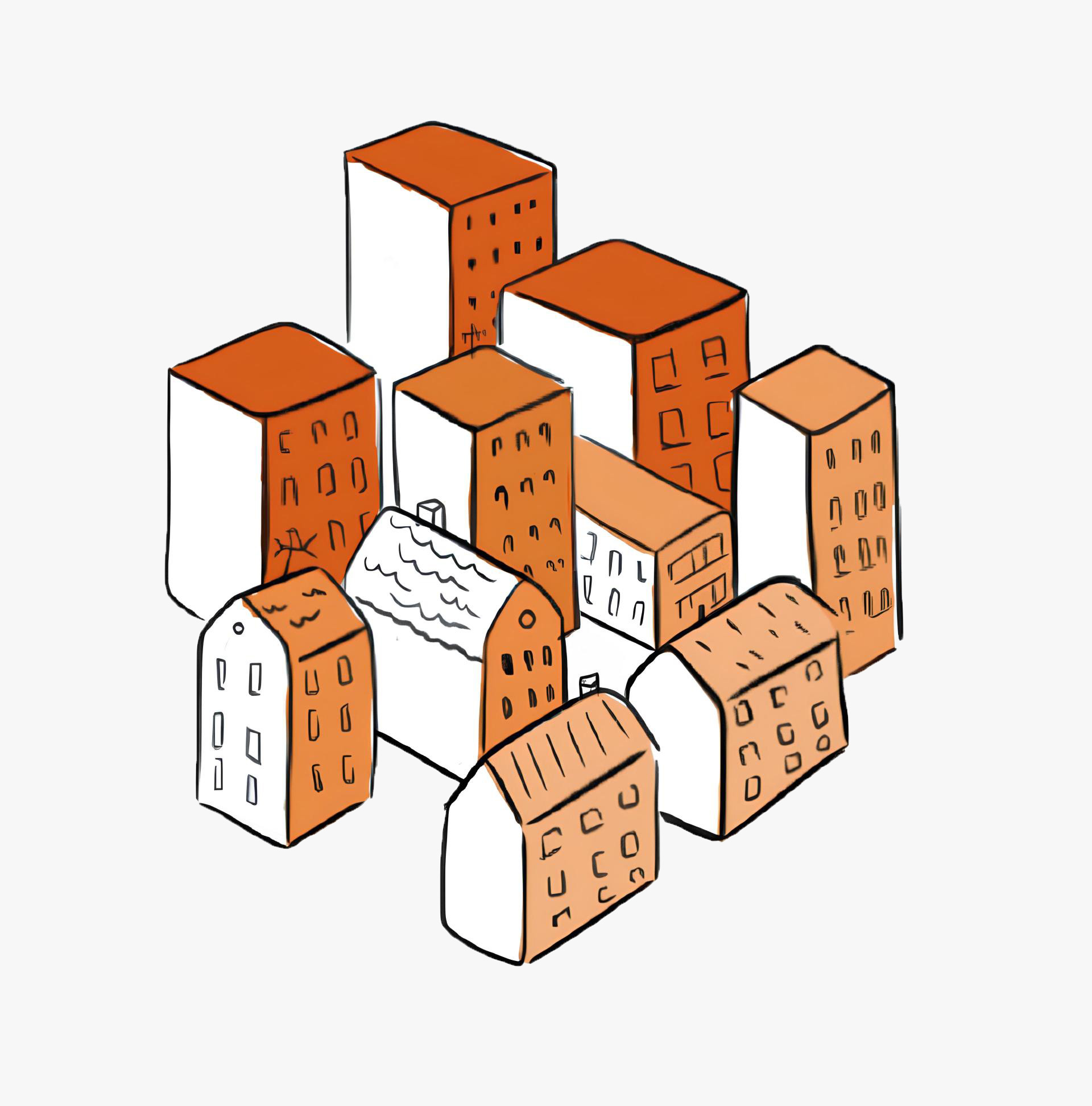
Residents of the compact city enjoy a highly efficient urban form characterized by close proximity to services, reduced travel times, and variety of uses and functions.
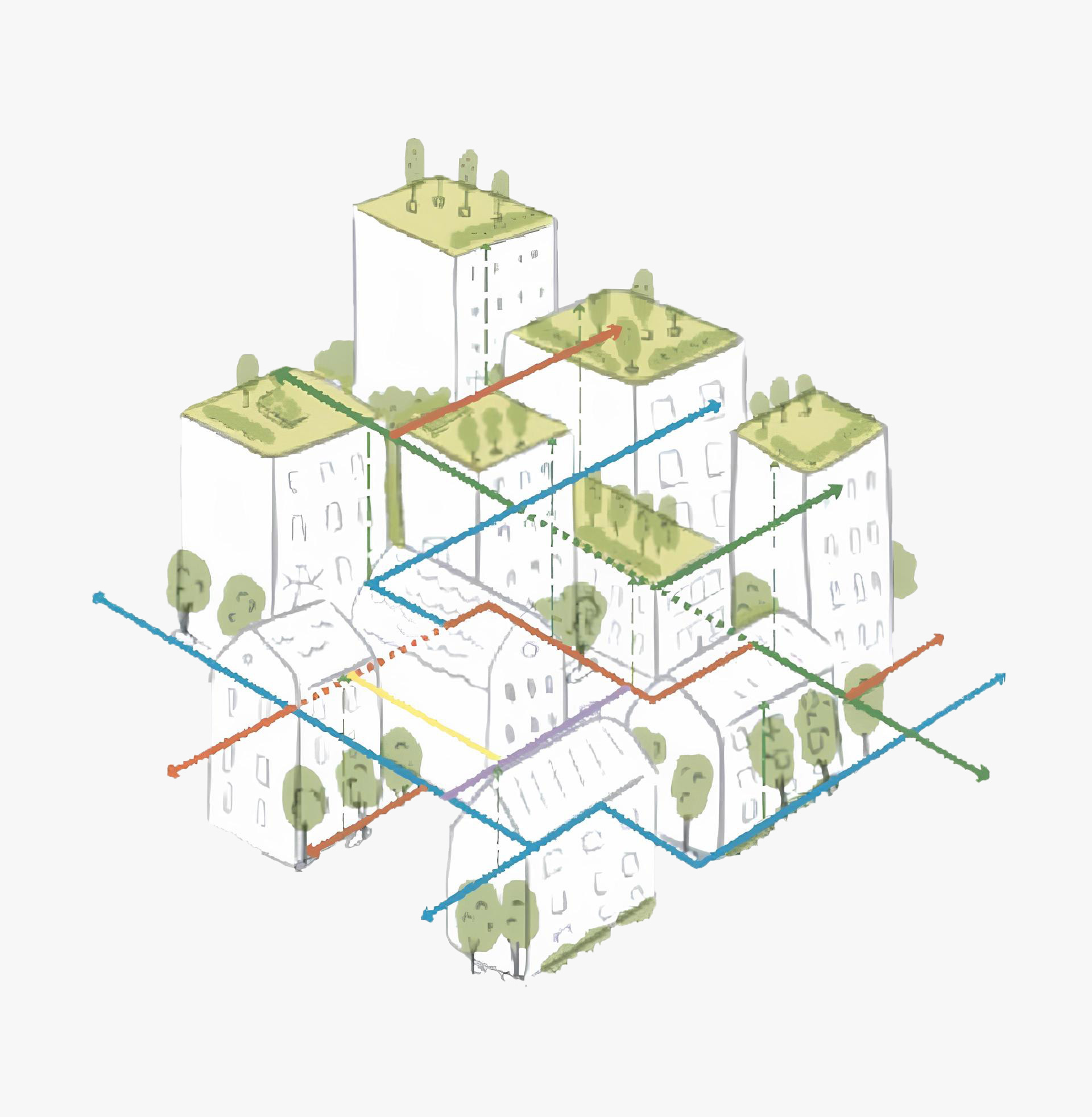
Residents of the connected city leverage from permeable and efficient street network with walkable and cyclable distances to close destinations while having access to multi- modal transport systems to connect with the opportunities of the wider city.
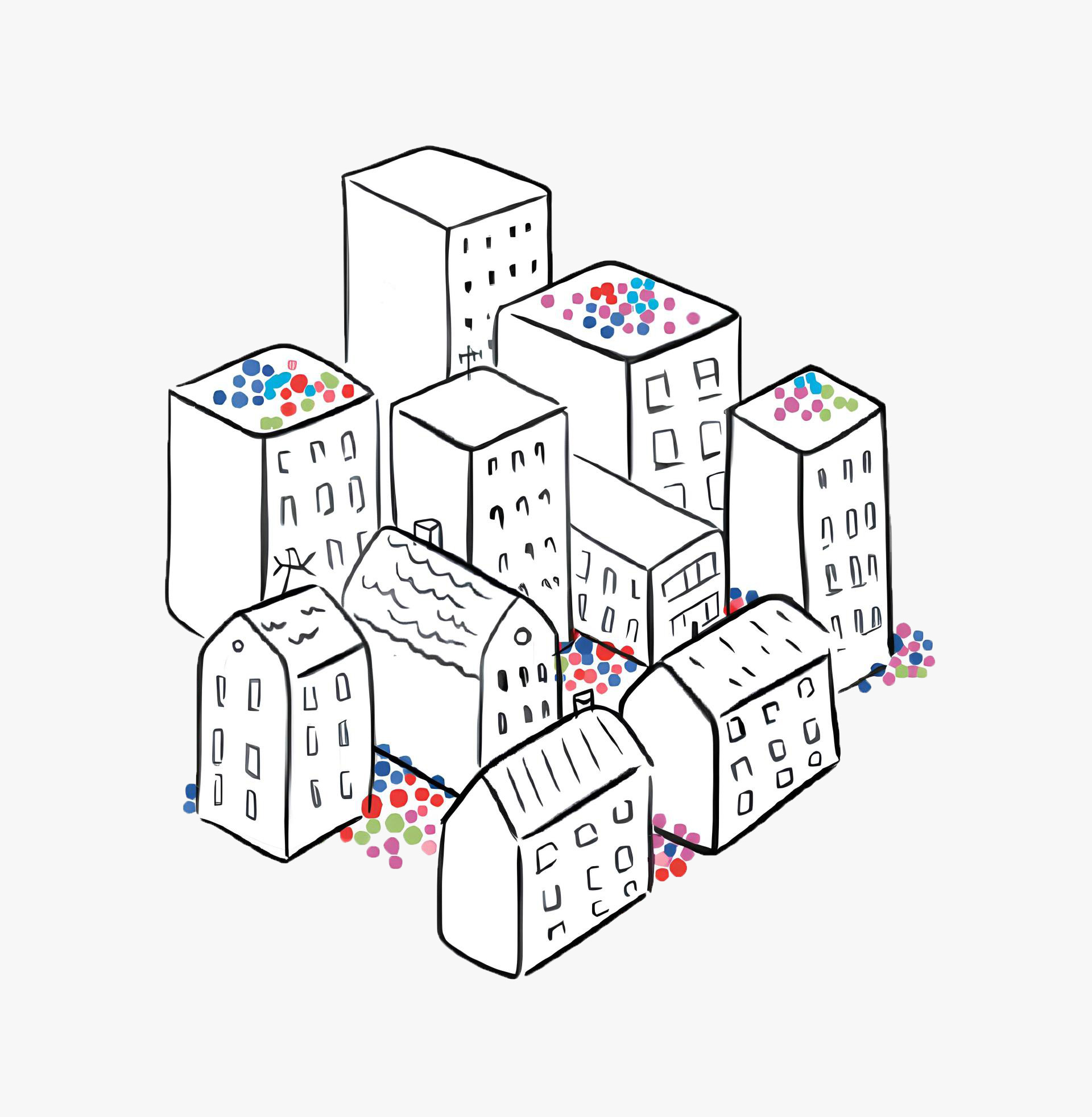
The residents of an inclusive city have equitable right to the city, access to services, employment, open public space, public transportation, and other opportunities the city provides.
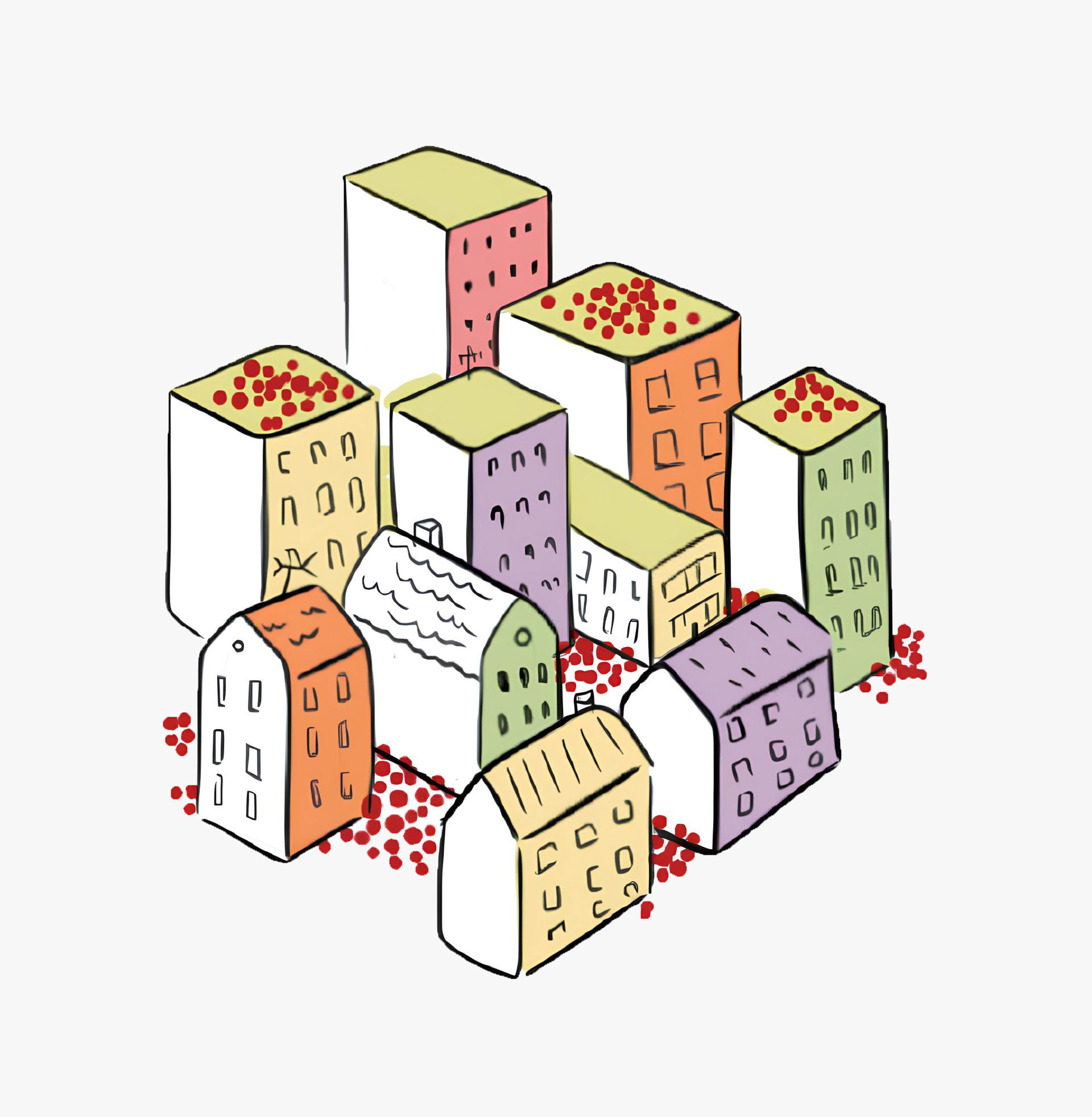
Residents of the vibrant city have access to the diversity of activities, urban services, and economic opportunities.