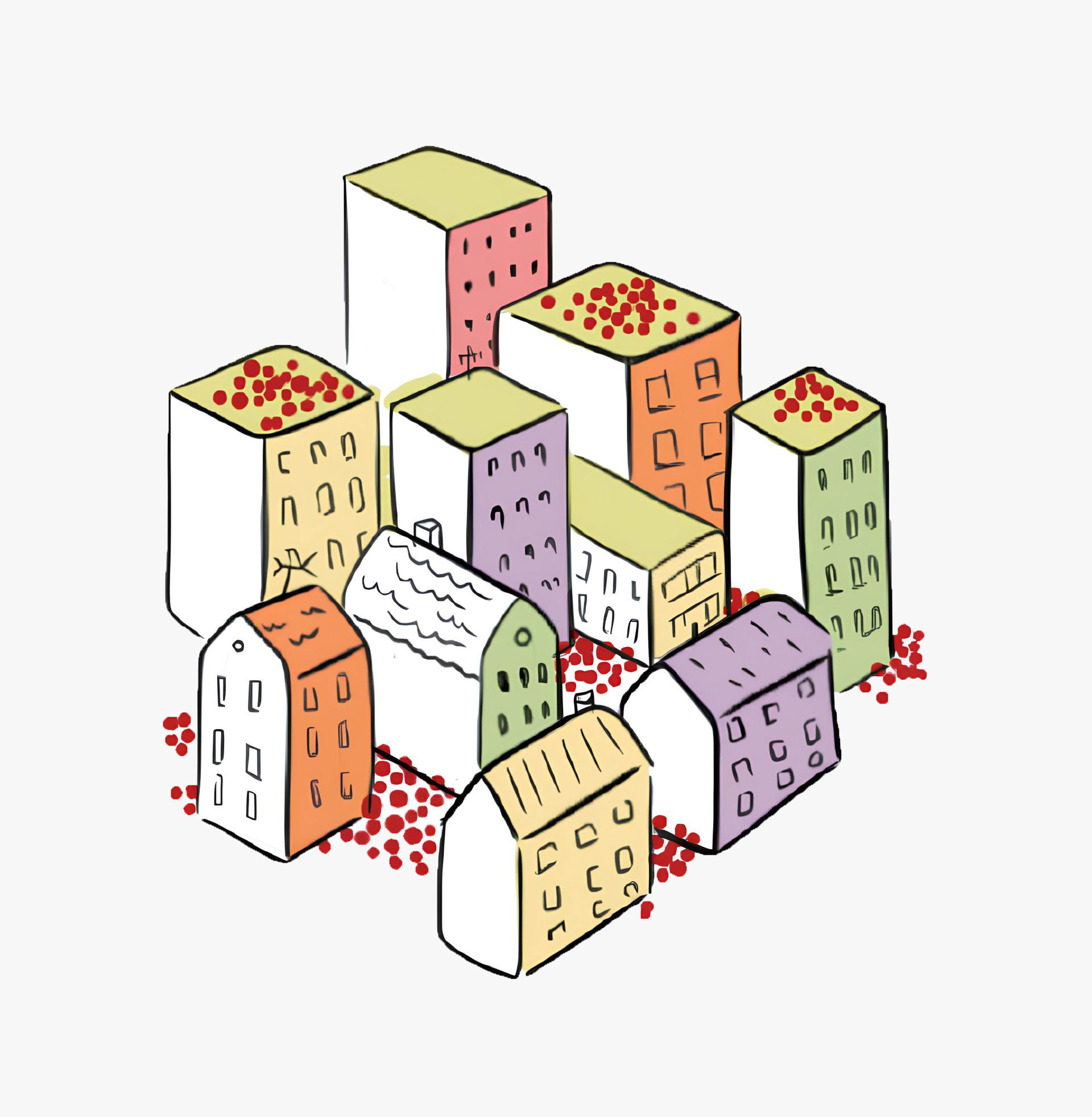
Residents of the vibrant city have access to the diversity of activities, urban services, and economic opportunities. A vibrant urban environment forms place identity, facilitates social interaction, communication, physical and learning activities and attracts people to live, work and spend time in the vibrant neighborhood. A vibrant city provides an enabling environment for building social, cultural, and economic capital, where urban character is emphasized.
The Vibrant City relates to the New Urban Agenda transformative commitments: 26, 27, 34, 36, 37, 38, 39, 40, 45, 53, 62, 68

To promote a vibrant and dynamic urban environment, it is important to ensure a diversity of different functions and uses within a neighborhood that encourage residents to interact with a wide range of activities and walk to diverse destinations. A flow of different users can create vibrant and safe places. In addition, mixed-use development promotes agglomeration of economic activities, which is a key feature of vibrant neighbourhoods and communities. Temporary architecture, such as temporarily pedestrianised streets, can help local government to test planning solutions, and can be facilitated through designing for flexibility.

While defining different activities within the neighborhood, the “rule of 10” (as per 3.9) formulated by Project for Public Spaces might be scaled up, which recommends creating 10 public destinations, activities within the neighbourhoods (in addition to mandatory distribution of social facilities).
4.1.1 Balanced Mix Of Activities
To ensure vibrant mixed-use development that also creates a sense of place, a balance between different activities should be taken into account, including a balance between professional, leisure and recreation, commercial, educational activities, etc. In addition, compatible functions, if planned right, can maximise the impact of each other (e.g. park in proximity to public library, university campus in proximity to public spaces with learning, eating activities, etc.).
4.1.2 Vertical Zoning
To promote a vibrant urban environment, vertical zoning should be applied. Vertical mixed-use development facilitates activation of the street edge through ground-floor retail and commercial uses while providing easy access to local employment opportunities, promoting walkability, ensuring better safety and emphasizing local identity through local small businesses and design elements. Active street edge, particularly at the street corners, may activate the public realm. Where applicable vertical zoning might include green roofing to create private/semi-private recreational spaces, community gardens, water harvesting and can expand tree canopy over streets and non-green circulation zones.
While planning functions at the scale of a city block, it is essential to ensure compatibility of uses and promote buffer spaces where applicable (office floors, etc.). Shared spaces as per 3.9.1 might facilitate interactions between residents.
4.1.3 Active And Interesting Facades
Relation between the ground level, the sidewalk and the street significantly contributes to the attractiveness of the urban environment. Visually more attractive and interesting streets are used more often. In addition, active frontages contribute to streets safety and people’s perception of the urban environment. Facade design can support the local identity by including design elements that promote local culture, traditional architecture and consider local climatic conditions.

To ensure a viable mixed-use development, the positioning of different activities within the neighborhood should be appropriate and encourage residents to walk to their destinations. It is recommended to promote 5 min walking distance (from 400 to 450 m) to shops and services. Proximity is a crucial factor that makes different uses benefit from each other (e.g. a school or university campus can make an adjacent park viable etc.).

The diversity of parcels and plots promotes a great diversity of urban fabric and architectural forms necessary to create a vibrant streetscape.
Smaller plots create a fine grain that promotes a greater level of mixed-use, creates a better permeability of urban fabric that enables better walkability and a higher level of pedestrian interactions. In addition, smaller units are more attractive for small businesses, which is an important factor in achieving a vibrant environment. In addition, neighborhood permeability supports small commercial outlets by increasing slow moving and diverse, pedestrian street traffic.

In some contexts, the analysis of current urban grain is critical to understanding the adaptability of the built environment to climatic conditions. The conduction of urban heat island, synthesis of local knowledge, comparison of fine grain and new development pattern might be helpful in understanding which type of urban structure is performing better in terms of climate adaptability.
4.3.1 Leveraging From The Existing Context
Regeneration and bringing new uses to unused/ abandoned or dysfunctional structures that have design potential can significantly revitalise the place, encourage businesses and create an enabling environment for a wide range of activities. Regenerated buildings/urban areas can support the unique urban pattern, bringing social value to the existing urban form, increasing vibrancy of the neighborhood.

4.3.2 Reinforcing Local Identity
Local identity can be emphasized at the building unit scale through promoting context-specific design elements, using local materials and/or colours, and the form of the built environment.

Vibrant neighbourhoods should include “character areas” that emphasize local culture, activities, climate, natural assets, etc. and are well defined by urban morphology (character of urban pattern, size and positioning of the blocks, adjacent public space, etc.). Activity hotspots (markets, identical public spaces, active streets, etc.) coupled with appropriate design significantly contribute to the creation of a sense of place, encourage economic activity, walkability and tourism.

While designing the urban structure it might be helpful to analyse the local urban morphology within the city (specifically historical, central parts) to identify particular features that contribute to the vibrancy of the urban environment. The defined elements might be replicated in the urban design (traditional design elements, type of street shading, etc.).
4.4.1 Incorporating History
Historic cities have the most attractive urban space. The vernacular urban pattern may be embedded in the neighborhood structure to retain the traditional character of the city. The traditional urban morphology may be reflected in public space network, urban grain, streetscape, etc. Street dimensions, street enclosure, open public space typology and other characteristics should be analysed and relevant features may be replicated in the new urban structure/ development.
To facilitate the vibrancy of the built environment and communities, a certain degree of urban density should be supported. Higher population density equals a higher frequency of interactions which should be supported by good quality design that promotes a comfortable and safe environment that enhances opportunities for self-expression and communication. Capacity building and engagement with communities may provide useful to discuss how some of the qualitative benefits that sprawl is perceived to offer may be incorporated into the design of compact neighbourhoods.

Residents should have a wide choice of transport modes that are available and accessible, such as cycling, taking public transport / e-transport, and driving to allow a diverse range of users to interact with the built environment (including economically). Therefore, the street network should be universally accessible and adapted for various modes (cycling paths, sidewalks, tracks, public transport infrastructure, etc.) following “complete street” principles.

4.6.1 Efficient Public Transport
The vibrant city should ensure efficient public transport that promotes equitable access to social and economic opportunities and facilitates clustering of jobs, housing, services (routed along the home-work-services triangle) and amenities around public transport hubs, bringing numerous economic benefits. In addition, public transportation should be affordable and accessible to all users.

Connections with the natural environment significantly contribute to a community’s wellbeing. Revealing the site’s natural resources and supporting them with urban design (through creating an open public space, developing a riverfront, etc.) will enhance local character. Natural assets should be revealed and integrated within the neighborhood to create pleasant landscapes and vibrant places that attract residents and tourism.

4.7.1 Promoting Local Flora
Urban vegetation can contribute to the character and quality of the built environment while promoting walkability, ensuring safety and a healthier ecological environment. Identifying, articulating and promoting ecosystem services delivered by nature and local species, supports the use of local species to form identity and character, an attractive and comfortable environment, biodiversity and more enjoyable public spaces.

Where applicable, it is important to promote context-specific vegetation. Although climate change may impact the kinds of local vegetation species, these can often prove the most effective both at combatting local climate change related risks (such as flooding), performing valuable ecosystem services such as water purification, may be providing cultural significance, as well as growing local/historically relevant produce. Local knowledge of species and change of vegetation over time can help to identify key places where vegetation may revitalise the space and bring back its identity, positive perception and value (e.g. additional vegetation to enhance a botanical garden, revitalisation of riverfront through vegetation, restoration of local forests, etc.).
Safe and walkable streets with a diverse range of uses are the key elements of a vibrant city. Active and interesting street edges coupled with a “complete streets” design approach create a pedestrian and cycling-friendly environment that provides better safety and enjoyable open public spaces for residents while meeting diverse mobility needs. The ‘living street’ concept may be used to prioritise certain streets for pedestrians and cyclist movements and create a vibrant social space where people can meet and children can play safely.

In some contexts, active streets should be carefully designed, taking into account the surrounding context. The analysis of potential intensity and convenience of future pedestrian flow might be helpful to identify the key active streets with appropriate activities. Some elements such as urban advertising, pathway signage, etc. should be designed in harmony with the adjacent areas (which is particularly relevant for areas in proximity to heritage sites). Special attention can be paid to lighting so that needs of safety are balanced with light-adverse biodiversity (e.g. moths and nocturnal foragers).
4.8.1 Reinforcing Local Identity
The relationship between the streets, buildings, and vegetation contributes to creating a positive sense of place that an appropriate movement pattern should support. The street design can enhance the local character of the street and in some cases, cultural identity, through the choice of activities and design elements such as urban furniture, public art, etc. Design solutions that address different climatic conditions and environmental features reinforce the local identity and a sense of belonging (e.g. shadings, terraces, etc.).

Vibrant open public spaces should be designed to ensure comfortable and safe use for everyone and engage people to participate in a wide range of civic, physical, social and other activities. Public space design should ensure accessibility and an attractive environment for all people, ensuring intergenerational and intercultural social mix and recognising children as active users of space. That implies creating a variety of activities appropriate for each user group. According to Project for Public Spaces, places are particularly vibrant when they include at least 10 activities (not limited to consumption) designed to create social linkages (The Power of 10). The principle might be scaled up and be applied to a wider area (e.g. neighborhood) to have at least 10 places that attract residents.

The different activities might be defined during the participatory placemaking sessions with the residents, where they are encouraged to think about particular features and identity of their environment and community. Their thoughts and ideas might be used for community mural, that can become a local landmark and an interactive element for open public space.
4.9.1 Reinforcing Local Identity
To enhance local identity, it is necessary to consider social dynamics and cultural specificities of the local communities and local heritage to generate a strong relationship between people and place. Open public spaces may provide amenities for cultural activities and design elements specific to the local contexts and climate (terraces, pergolas, urban furniture, public art, etc.).
In some contexts, especially in newly planned neighbourhoods residents may be encouraged to develop their own particular narrative and character, putting their ideas in a street mural which can serve as an example of collaborative public art.
4.9.2 Vibrancy For Stimulating The Local Economy
Vibrant neighbourhoods include open public spaces that have potential to contribute to the local economy. Small businesses and ventures that fit the human-scale environment support the local economy and add to the identity of
the place. Points of small commerce should be promoted and supported by a safe and attractive urban environment that fosters walking and cycling.

Public space is essential for activating the local economy. In some contexts, public spaces (incl. streets) may include a place allocated for informal businesses. For example, setting up kiosks that could be rented out or delineating for street vendors using different textures of the pavement and colour.
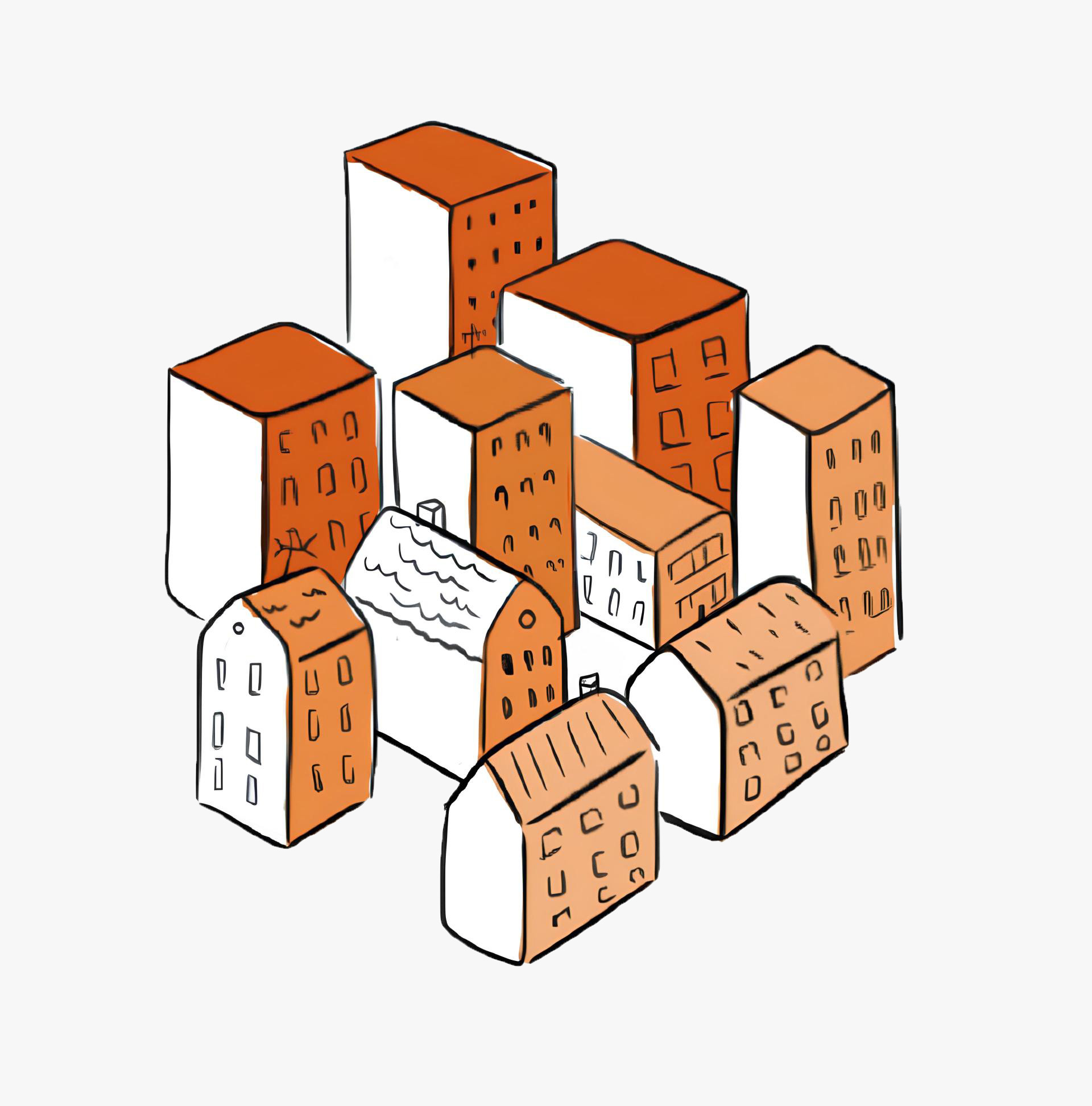
Residents of the compact city enjoy a highly efficient urban form characterized by close proximity to services, reduced travel times, and variety of uses and functions.
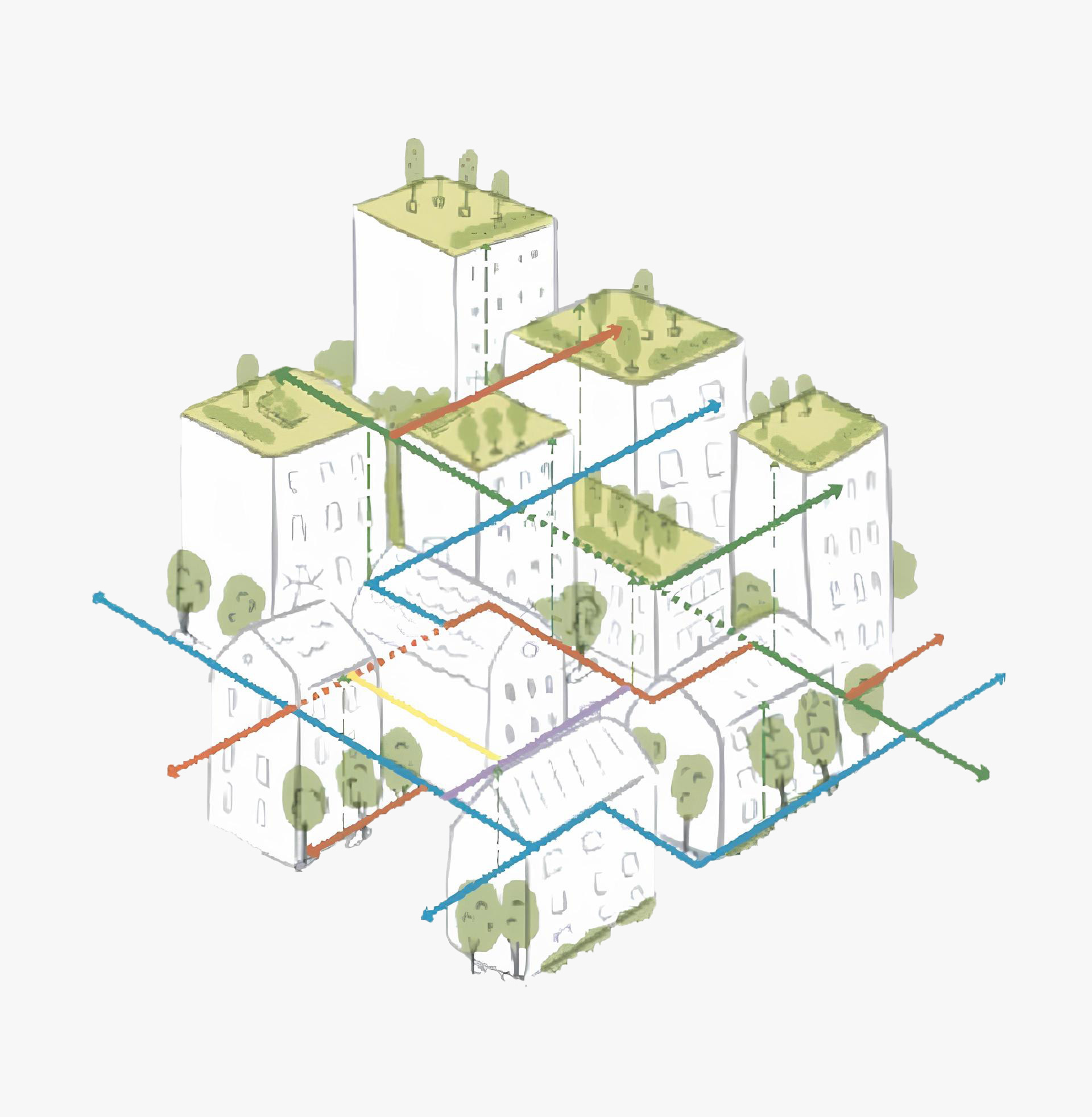
Residents of the connected city leverage from permeable and efficient street network with walkable and cyclable distances to close destinations while having access to multi- modal transport systems to connect with the opportunities of the wider city.
The residents of an inclusive city have equitable right to the city, access to services, employment, open public space, public transportation, and other opportunities the city provides.

All the residents of the resilient city are guarded against immediate and chronic stresses within urban systems and are prepared for future potential challenges.